Next of Kin
A more-than-human card experience
The landscape outlasts every civilization built on it.
To inhabit another species is to remember what the land has never forgotten.
Most experiences of place begin and end with the human story. The monuments, the dynasties, the economies, the long arc of what people have done to a landscape. What is rarely centered is what the landscape was before, during, and after that human story. The species that witnessed every transformation, the geological forces that shaped the ground beneath every civilization, the ecological systems that persist, diminished, displaced, or extinct, long after the empires have dissolved. There is no existing format for a collective, embodied encounter with that longer story. Next of Kin was made to fill that gap.
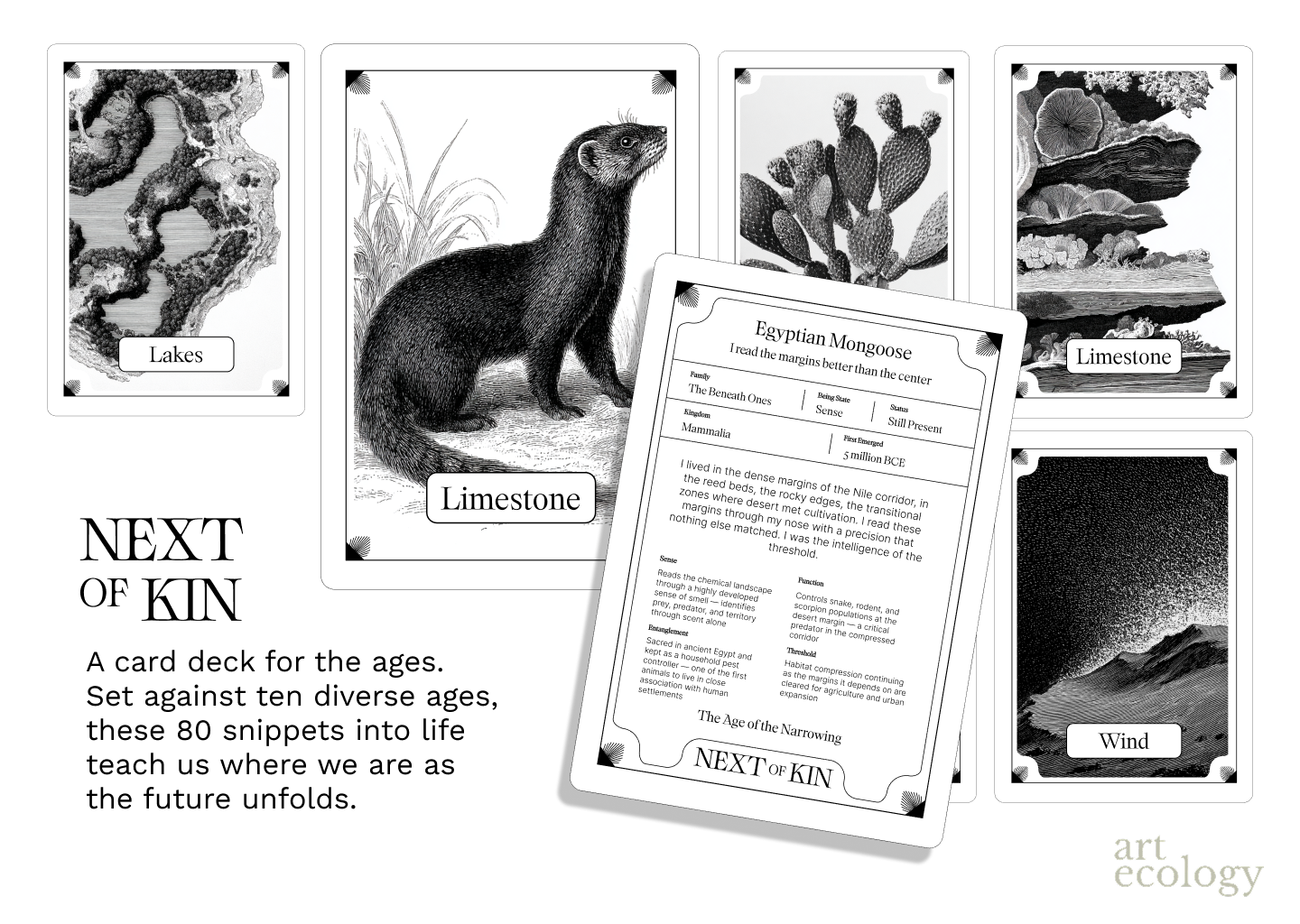
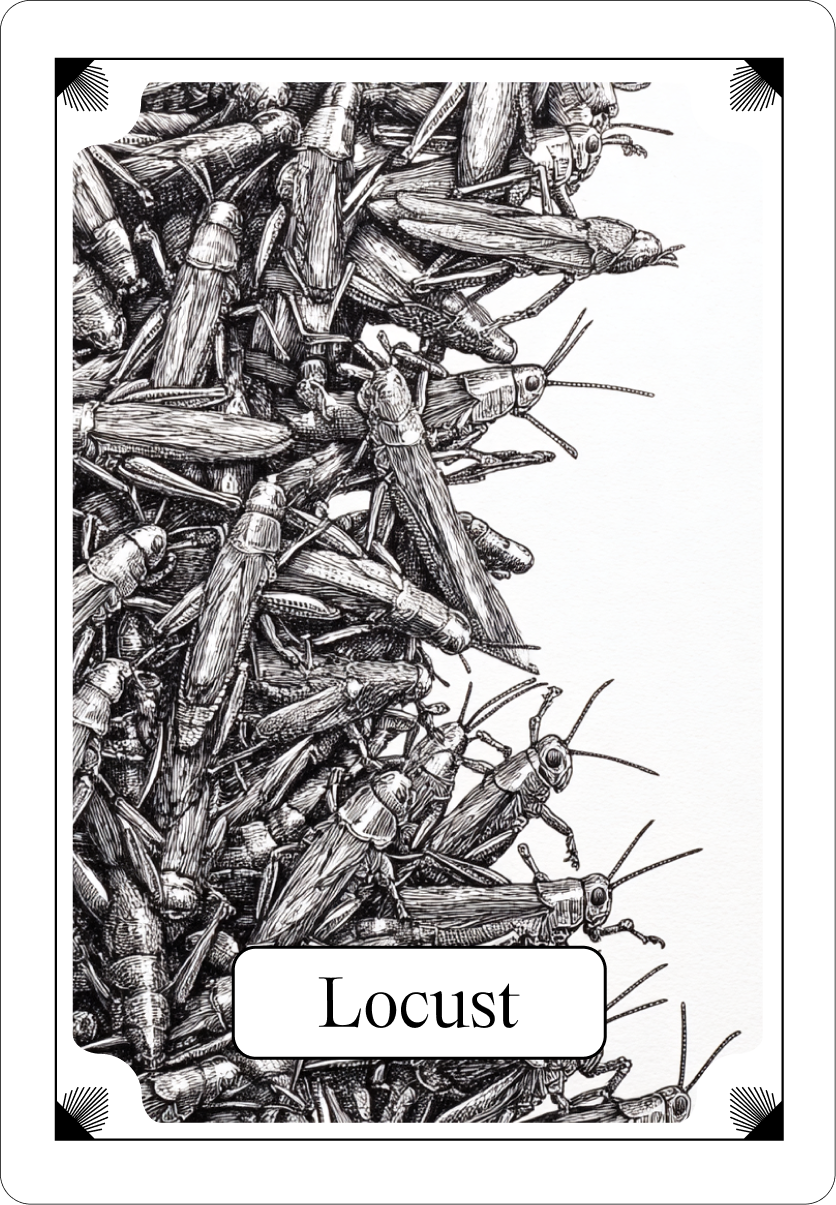
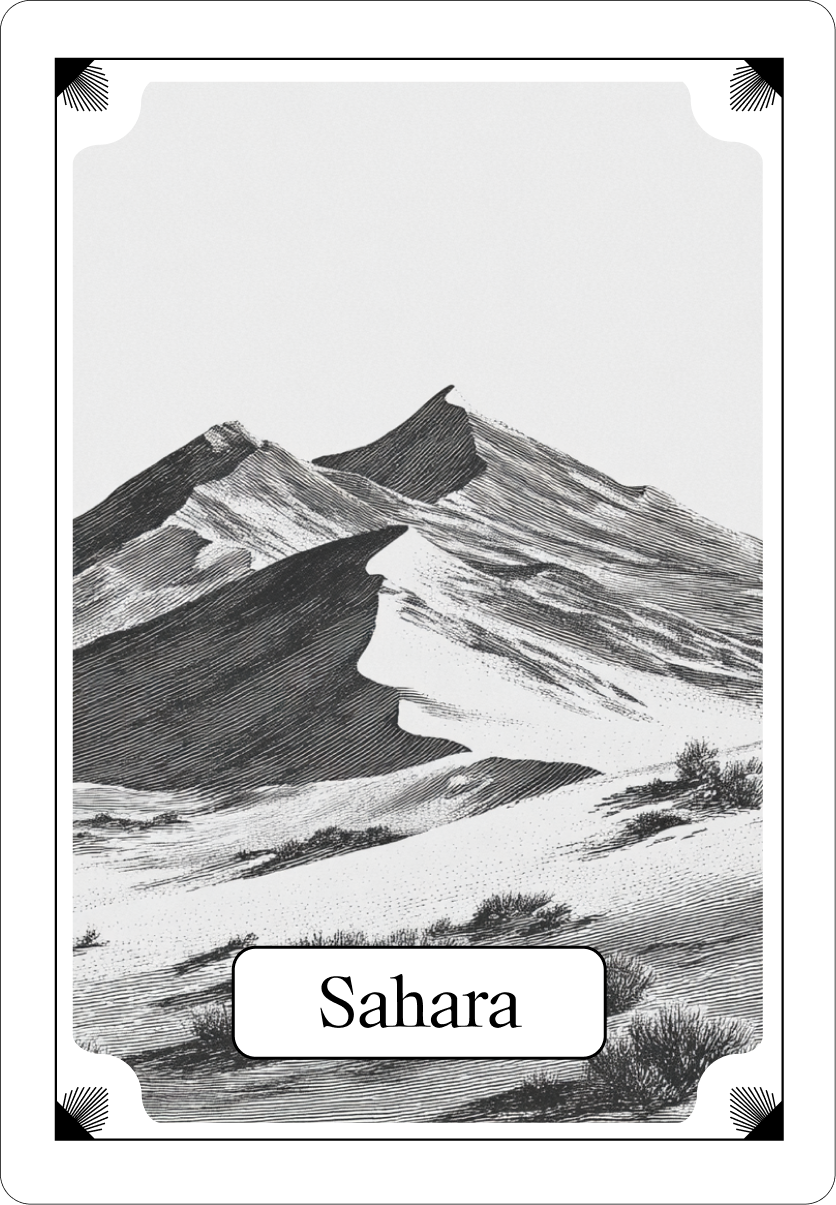
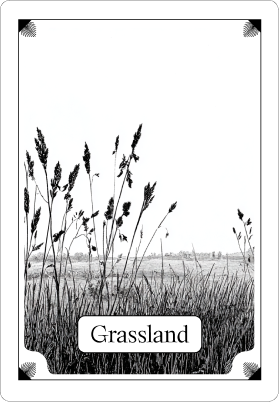
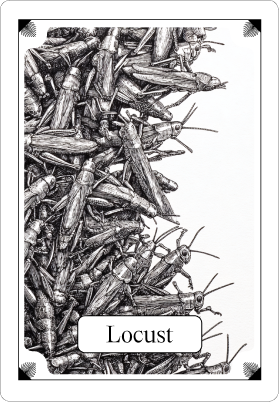
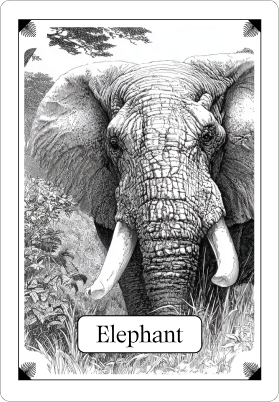
Next of Kin is an immersive card experience in which participants temporarily inhabit the perspective of a non-human species, a plant, an animal, or an elemental force, whose lineage runs deep through the ecological history of a specific place. Each participant receives a card introducing their kin, a character with a biography, a mode of sensing the world, an ecological function, a history of entanglement with human systems, and a threshold, something that is changing, at risk, or already lost. As the experience moves through time, each ecological era is introduced, a short immersive story of what this land once was, and a question lands across the group. Participants speak as their kin, or as themselves. The boundary between the two is part of the experience.
The deck is organized around an arc that maps the deep time of any bioregion. From geological formation through early ecological emergence, a period of peak abundance, the moment of first human contact, an era of transformation and rupture, and the present unraveling. The experience closes with The Age of the Unknown Becoming, a future-facing collective visioning that asks what the land dreams when nothing is asking anything of it. Next of Kin is designed to be embedded within a wide range of gathering formats, dinners, conferences, educational programs, retreats, or public events, and every edition is built from original ecological research, custom species selection, and written card content specific to the place and the people.
ArtEcology conceived, designed, and produced Next of Kin, developing the experience model, the card architecture, the taxonomic system, the ecological research, and the written content for the first prototype edition. The project represents the studio's commitment to experiences that are intellectually rigorous, ecologically grounded, and aesthetically distinct, experiences that treat non-human intelligence as a serious epistemological resource rather than a decorative reference.
Next of Kin demonstrates that deep ecological time can be made visceral, personal, and socially generative, that any gathering can become a site of interspecies encounter, and that non-human perspectives carry forms of knowledge that no human discipline has adequately centered. The Egypt prototype proved the model across a group of 80 participants. ArtEcology is now available for the development of custom bioregional editions of Next of Kin under commission, new places, new species, new ecological stories, built on the same architecture and held to the same standard of rigor and care. Each edition is an original work of ecological and experiential design.
PROJECT TYPE
Experiential Design, Artistry, More-than-Human themes
LOCATION
Egypt, Nile River Delta, first prototype edition. Available globally for custom bioregion card development under commission.
YEAR
2026, first edition. Ongoing.
COLLECTIVE MEMBERS
Sarah Baxendell (ArtEcology) x Charlie Fisher (KOMMA)
ROLES
Experience Design (facilitation model, era structure, and group prompt system, adaptable across event formats), Conceptual Framework (thesis of ecological and epistemological humility through non-human perspective inhabitation), Taxonomic Architecture (classification system of 20 poetic families across 8 kingdoms), Ecological Era Development (original research and writing for 10 eras spanning deep geological time to the present), Species Selection and Card Content
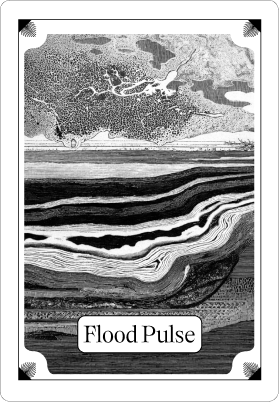
(80 unique kin across all eras, each with biography, sense, function, entanglement, threshold), Illustration Direction (visual style guide and image generation briefs for all 80 species in an 1880s botanical and woodcut aesthetic), Production Design
(metadata architecture, Figma template system, print specification, and physical card production)